


PENINSULA DE OSA
Costa Rica, January 2019
After an incredible trip in November 2018, hiking the Grand Route (GR) 131, in six days from the south to the north of Tenerife (the biggest of the Canarian Islands, located near the North African Atlantic coast), my travel bug started to call for my attention again.
There was only one problem… While hiking in Tenerife, I had developed a stress fracture in the third metatarsal of my right foot. I first had to recover for about six weeks and rebuild my strength again. It seemed most practical to travel to a small country where I would be able to move around relatively easy. Since I had (on and off) been taking Spanish language courses for the past years, I had been looking forward to travel to a Spanish speaking country for a long time… At last, one of the major requirements for my travel destination was: nature, lots and lots of nature… I came to the conclusion that Costa Rica was definitely the destination I was looking for.

A Belgian friend of mine, who had visited Costa Rica himself, recommended me to take a trip to Peninsula de Osa and Corcovado National Park. It’s estimated that this part of Costa Rica holds up 2,5% of the biodiversity in the whole world and it’s believed that this is the most biological intense place on earth. Well, I was looking for lots of nature: and I found it!
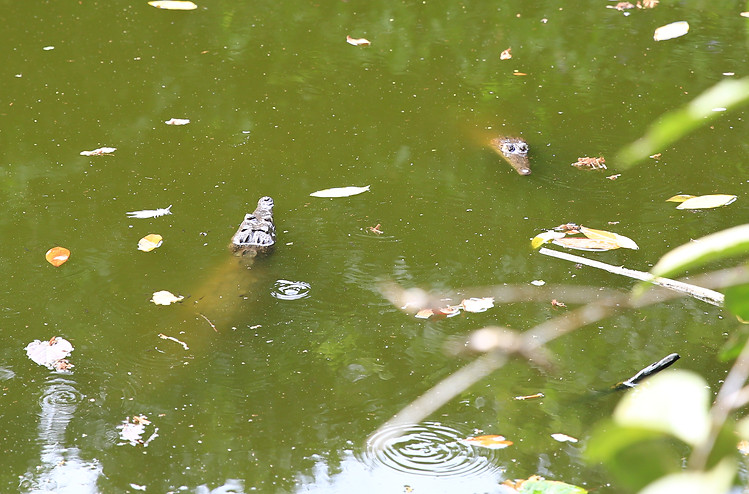
I started my adventure at Peninsula de Osa in Puerto Jiménez, a small town on the east coast of the peninsula. Although not part of the national park, Puerto Jiménez is full of wildlife. Where people live, there is a lot of food to be found. So, it’s a perfect place for many animals to hang around and give a shot at an easy meal. Iguanas, all types of birds and even a crocodile mum and her babies roamed around town.


For me, the highlight of Puerto Jiménez was the mangroves. Accompanied by a guide, I explored this wonderful place. During low tide, the sand banks around the mangroves get completely above sea level. The particular trees that grow on these sand banks form an incredibly photogenic and breath taking scene. The roots of these small, umbrella shaped trees stand high above the round. Their green leaves stand out against the with interesting clouds filled sky, constantly changing their shapes…


If you would like to pay a visit to the mangroves, it’s very important to know when low tide starts and -maybe even more important- when high tide kicks in again. Once it starts to be high tide, the water rapidly turns the sand banks into sea again. If you’re too late to notice, it’s likely that to get trapped… I would recommend you to share the experience with a guide that is familiar with the place and its circumstances.


Maybe it’s just a very small detail, but I can still vividly remember the magnificent taste and colour of a mango I ate in Puerto Jimenéz. I bought this beauty in a local fruit- and vegetable shop. A boy that attended me, helped me to pick out the nicest fruits. Once I returned at my hostel, I couldn’t wait to taste some of the fruits that I bought. I split the mango in half, peeled it and before I realized I had also peeled and eaten the other half of this very tasty mango.
It was absolutely delicious!
The next day I actually went back to the shop to get another one of these delicious mangos. I started off by telling the boy who had attended me the day before: ‘That mango that I bought yesterday…’, I couldn’t finish my sentence. Interrupting me he goes like: ‘Oh, I’m so sorry! Was it bad..?' A bit confused I answer: ‘No, not at all. It was actually the nicest mango I’ve ever tasted and I’m here to get another one’. Well, he was very glad to hear that I had enjoyed it so much and helped me to pick out the (second) nicest mango…
To me, trying local foods and especially tasting new fruits and vegetables is one of most pleasant experiences of travelling. Once we’re adults, it’s often hard to find new types of food that we never tasted before (at least in our home countries). It’s a very particular sensation to taste a new flavour. For me, the first bits are often not that great since I don’t know what to expect, but mostly it turns out to be really nice. In Costa Rica I’ve tasted many new types of fruit/vegetables that we don’t even know in Europe, like Cashew fruit (Anacardo, the fruit that produces the Cashew seed, where Cashew nuts come from), Chayote, Guanábana, Pejibaye, Malay Apple (Manzana de Agua), Granadilla, Cas, Rambutan, … Well if you take a trip to Costa Rica it’s definitely worthwhile to visit a local farmers market and to treat your taste buds well!
After adventuring around in the mangroves of Puerto Jiménez, it was time to move on to the south-west tip of Peninsula de Osa with its paradisical beaches, hidden waterfalls and magical strangler fig trees. This area can be reached by public transport from Puerto Jimenéz. The bus doesn’t run frequently though, so it’s important not to miss it! It was a very unique experience to camp on the beach, get out of the tent before sunrise, roam around the area and watch the sun painting the landscape in warm colours while rising. I was lucky enough to see a bunch of Howler monkeys and Spider monkeys around here and to witness Macaws, Kingfishers, a Black Hawk, King Vultures and even a Potoo in their natural habitat.


Once in Corcovado National Park, I was able to complete the Costa Rican ‘monkey quartet’ by encountering both the Squirrel Monkey and the White Faced (or Capuchin) Monkey. I was also able to add the Black Throated Trogon to the bird list. The male was preparing a place to nest in the old trunk of a tree, while the female was watching if he was doing a good job…


If you already believe that Peninsula de Osa is the go to place if you want to see a lot of wildlife: there is more! After my visit to Corcovado National park, I took a trip to Drake Bay, which is also part of Peninsula de Osa, where I joined the jaw dropping night tour by ‘Tracie the Bug Lady’.
Tracie and Gíanfranco know the area and its nightly wildlife so well..! They have the ability to show you a new bug, frog, mammal, spider, insect, lizard, bat, you name it… literally every 5 meters. And, they know what they are talking about! With unrivalled enthusiasm, they tell all kinds of details about all the animals that they found. Down here a small selection of the animals that they showed me.
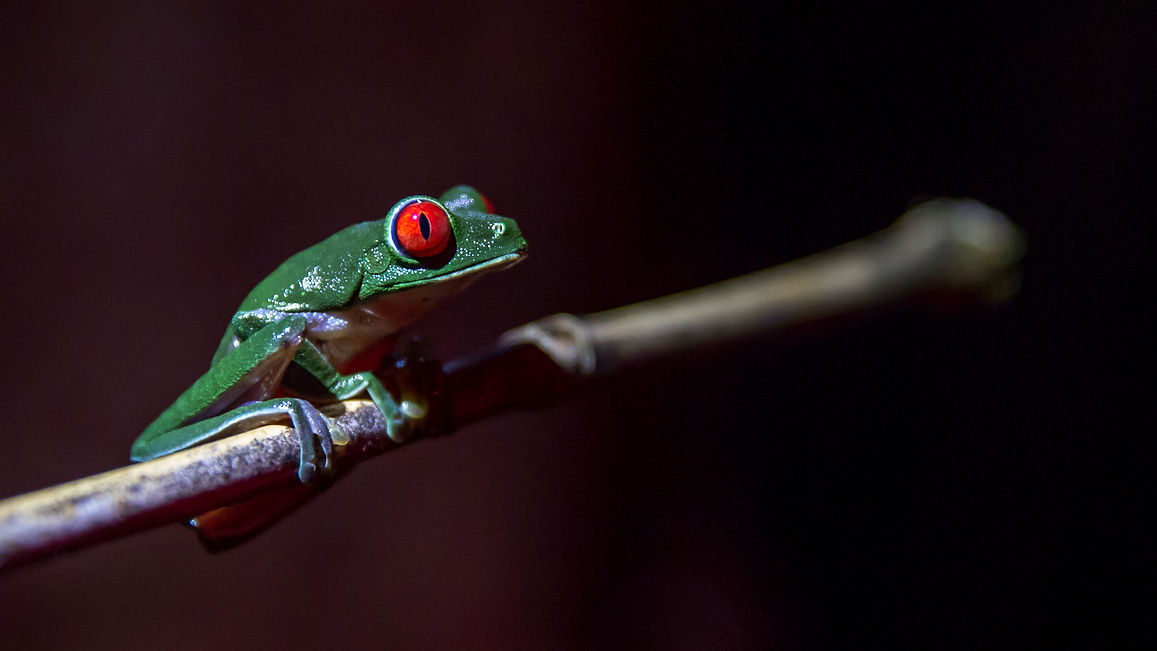


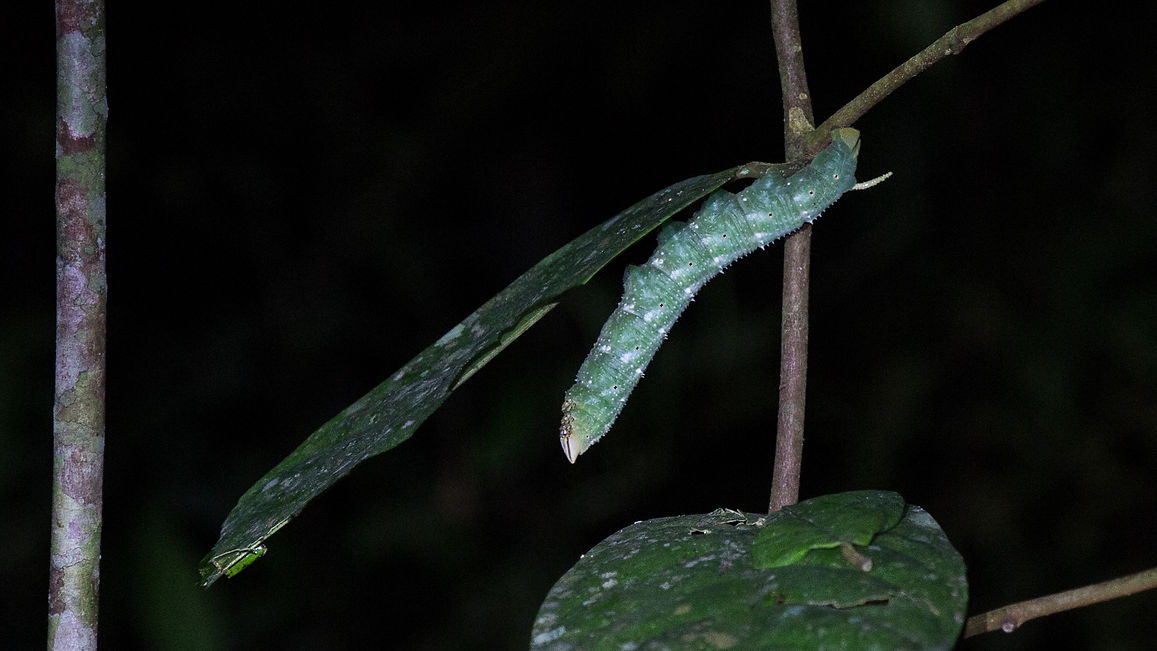


The most special one they showed me is the ‘Velvet Worm’. They are, apparently, very rare and a unique part of the animal kingdom. There are many different types of Velvet Worms and among them there are Velvet Worms that give a placental birth… So technically they don’t fit into any subcategory of the animal kingdom…

Another very interesting animal I’ve seen during this tour is the Trapdoor Spider. This spider makes a tiny ‘house’ in particular types of dirt walls. Her house has a small door, where she hides and waits until an insect passes. With the speed of a lightning, she strikes and captures her prey… A fascinating way of hunting.

Ok, as you can see my love for any type of animal is -almost as big- as Tracie’s enthusiasm for all the small animals roaming Drake Bay. I want to highlight one more creature that Tracie showed me: the Whip Spider. The dimensions of this animal are just out of this world…


Last but not least, I went diving around Isla del Caño that’s located in front of Drake Bay’s coast. Here, I had my first encounter with both White Tip Reef Sharks, Sea Turtles and a Clown Crab! I had my first diving experience in Cape Verde in 2013 and continued my diving journey in Thailand in 2014. When in 2019 I had the chance to dive again, I almost couldn’t wait. Unfortunately I couldn't take photos of these beautiful moments, but I'm keeping the mental pictures in my heart.
To me, diving is just like going to space. Yes, I’ve got no clue what that feels like… I just know that being under the sea, surrounded by tons and tons of water, being neutrally buoyant in a habitat that’s not my natural one, feels like stepping into a whole different world.
Well, so far my wild animal encounters at Peninsula de Osa. I’m sure I even forgot to mention many others that crossed my path and I haven’t even extensively spoken about the flora around this place. I think it’s clear though that I passed an amazing and worthwhile time here. Thanks a lot for taking the time to read this post. I hope you have the chance to get to Peninsula de Osa at least once in a lifetime!


Check out other posts
France
Costa Rica
Mexico
