


PUEBLOS MÁGICOS
- Sep 14, 2021
- 7 min read
Mexico, December 2014 & July 2016
It turned out to be a hard task to select the photographs that I would like to share with you from my travels to Mexico. Until now, I’ve been to Mexico twice, about 7 weeks in total. During that time, I visited so many wonderful and diverse places: From the climbing Walhalla ‘Potrero Chico’ near Monterey in the North, to the rafting oasis of Huasteca Potosina in the East, to the surf hubs Puerto Escondido and San Francisco in the West, to the artisanal town of Oaxaca in the South, to the crazy metropole México D.F. It didn’t make sense to just throw a pile of the pics that I took in Mexico in one photo blog. That would be a bit messy and it wouldn’t show off Mexico like how I have experienced it.

After giving it some thought, I realized that there actually is one ‘thing’ that can kind of represent Méxcio(‘s culture) as a whole, as well as how I experienced México’s ‘urban’ part and that ‘thing’ is the ‘Pueblos Mágicos’. On this website the Mexican government describes a ‘Pueblos Mágico’ as:
‘Un Pueblo Mágico es un sitio con símbolos y leyendas, poblados con historia que en muchos casos han sido escenario de hechos trascendentes para nuestro país, son lugares que muestran la identidad nacional en cada uno de sus rincones, con una magia que emana de sus atractivos; visitarlos es una oportunidad para descubrir el encanto de México’
Google's translations: 'A ‘Magical Town’ (Pueblo Mágico) is a site with symbols and legends, towns with history that in many cases have been the scene of transcendent events for our country, they are places that show the national identity in each of its corners, with a magic that emanates from its attractions; visiting them is an opportunity to discover the charm of Mexico'.
At this moment, México counts 121 ‘Pueblos Mágicos’. I visited a couple of them: Tepoztlán, Tequila, Mazunte, … Taking Mexico’s definition of a ‘Pueblo Mágico’ to the next level, I will also include pictures of places in this photo blog that, according to me, also fit into it because they have given me the same kind of magical feeling :-) . Ok, maybe it’s a bit arbitrary but you’ll see that the pics I picked complement each other. In another photo blog, I will shed my light over the impressive Mexican nature. It definitely deserves its own space and attention.
We start off in December 2014 in Valle de Bravo, another Pueblo Mágico that I visited. Valle de Bravo is located at the banks of a big lake, surrounded by beautiful forest and mountains. As you can see, the typical Mexican colorful paper flags (Papel Picado) were decorating several streets. This is one of the characteristic that I really love about countries that seem to either have a Latin culture or are located in a tropical zone (or both!): the cities, towns, houses and other buildings are often painted or decorated with bright colors. In comparison with the typical colors used in European building styles, it is much more cheerful and it instantly lightens up a place. I instantly feel in a good mood, when I’m walking through such a scene. This, to me, is also a typical feeling of the urban part of Mexico (well, the slums and, on the other hand the neighborhoods full of skyscraper of the capital Mexico D.F. excluded…).

Papel Picado in Valle de Bravo


Kids playing around their parent's shop
Back to Mexico’s magical feeling, that I discovered again in Oaxaca. Wauw, I instantly loved this city. The farmers markets, the craftsmen / craftswomen selling their colorful hand made products in the streets: carpets, bags, table cloths, etc., etc., woman preparing traditional and delicious dishes at the central market, the ambiance at the central square, the souvenir shops selling handmade ‘Alebrijes’… ‘Alebrijes?’, you ask? Alebrijes are ‘paper-maché’ or wooden sculptures of fantastical animals. The sculptures are traditionally hand painted in a very detailed way and often with bright, contrasting colors. We paid a visit to a nearby town called San Martín Tilcajete, to take a look in a workshop where several artist were busy crafting and painting new Alebrijes. In Oaxaca, I bought several Alebrijes. Not only for myself, but also for some of my family members. I’m not such a big fan of buying a lot of souvenirs, especially not when it feels obligatory to buy something for loved ones ‘just because you went on a holiday’… People that are close to me know that I like it better to only buy them a gift (even if it’s their birthday) if I really feel like the person is really going to use or enjoy the gift. Often, I turn out to buy something several months before someone’s birthday, just because I randomly ran into something that made me think of that person (like: ‘Oh … is really going to like this’)… To get back to the Alebrijes: This was one of this times that I was really convinced to buy them as presents. I almost couldn’t choose, that how much I liked them. At the moment I write this I’m in Costa Rica, having a so called ‘sabbatical year’, and you know what? I took one of the Alebrijes that I bought in Oaxaca with me on this journey (just like some other precious souvenirs from other countries), to make me feel at home anywhere on the planet :-). These objects remind me of the great times and experiences I had in different parts of the world.


Handcraft & artisanal market in Oaxaca


Smoke, fire and traditional clothing at a food market in Oaxaca




Artists working on their Alebrijes

Hard work and concentration

Detail of a painted Alebrije


Music, tortillas from the comal and piñata at a local restaurant
Back to more magic! Just a bit south of Mexico D.F., there’s a small, but truly magical town called Tepoztlán. The town is located on a relatively flat stretch of land, hugged by a small mountain range on the one end and a big rock formation on the other end. A wonderful hike uphill through the jungle leads to an ancient Aztec temple with an amazing view over the colorful town. The hike is tough, but the massive trees with their fantasy like roots encourage to keep climbing. Once at the top, the sight of the temple makes one wonder about the Aztec culture. Coatis roam around the temple, hoping to get a snack from one or the other tourist. In contrast with the Aztec temple, Tepoztlán also has a big monastery. The monastery is located in a mystic park. I really liked to take pictures around there. I also really enjoyed trying some new types of food at the local restaurants, like real Mexican quesadillas with ‘flor de calabaza’ (edible orange pumpkin flower) and ‘Huitlacoche’. Huitlacoche is a grey fungus that grows on corncobs. In Mexico it’s combined with cheese and corn tortillas into a quesadilla. We also had some delicious traditional fruit sorbet at ‘Topeznieve’ and I bought a very comfy, warm cardigan at a local clothing shops. The design of this cardigan is based on traditional Mexican clothing. I still really love to wear it. Over the years I’ve realized that clothing and accessories can actually be very nice ‘souvenirs’. On the one hand, I really like buying clothes in small local shops. Not only it’s nice to support the local businesses, but they also sell clothes that represent the local ‘vibe’, if you know what I mean. A couple of weeks ago, I bought some very nice jewellery from local artisans in Puerto Viejo. The jewellery just breaths the Caribbean vibe and I love to wear it. On the other hand, every time I put one of my ‘souvenir clothes’ it reminds me of that one place where I bought it. I take very good care of my cloths and I wear them for many years. I’m now actually wearing a T-shirt that I bought in 2013 in Barcelona!
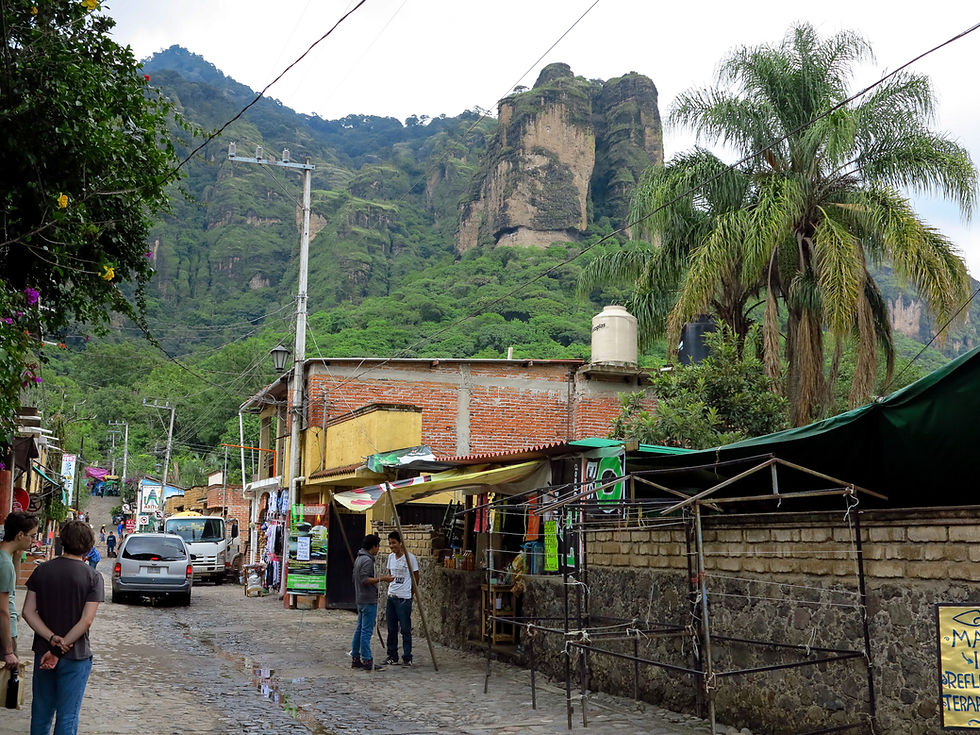
Main street of Tepoztlán with the Aztec temple on the hill in the background

Almost at the top!

View towards Tepoztlán from the top

One of the Coatis at the temple (in Dutch: Neusbeer)


Back down in town at the monastery

Tepoztán town life & street art




From the vibrant Tepoztlán, we jump to an even more colorful place: Guanajuato. Just walking around in Guanajuato and taking pictures of the colorful architecture was enough to enjoy myself for a couple of days. A viewpoint south of the old town, guarantees a great sight and fresh pictures. Another very interesting thing about Guanajuato’s architecture are the underground streets. A couple of the busiest streets in Guanajuato run through tunnels that are located in the rocks under the structures of the city’s buildings. Well see for yourself what this city looks like:

Reflection in a puddle


View over Guanajuato


A picture taken from one of the 'underground' streets of Guanajuato
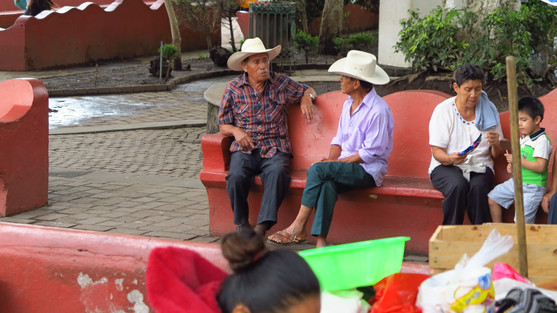
From Guanajuato, which is actually not a ‘Pueblo Magico’, back to a town that ís a Pueblo Magico ánd will certainly ring a bell: Tequila. What did we do in Tequila? Drink Tequila! :-) Even though I sporadically drink alcohol (meaning: I’ve got years of not drinking any alcoholic drinks and my ‘personal record’ is about 20 alcoholic beverages in one year), we took a tour in one of the most prominent Tequila distilleries of Mexico: José Cuervo. I was especially surprised that there are actually a lot more tasteful Tequilas than the ‘traditional salt and lime party Tequilas’ that people consume all over the world. Did you know that Tequila is a bit like Champagne? Just like Champagne can only be called Champagne if it was produced in the France Champagne region, Tequila can only be called Tequila if it’s produced in Mexico and if it contains at least 51% Blue Agave. There are only 5 regions in Mexico where this Blue Agave can grow, so it’s a pretty exclusive drink if you think about it like that! Tequila town is surrounded by miles and miles of fields of the Blue Agave plants. This landscapes and the ancient industrial facilities in Tequila are actually part of the UNESCO World Heritage. In Tequila I also really enjoyed to do some ‘shameless people watching’. At the central square, like in almost every Latin American town, people come together to sit, socialize and relax. It’s fun to see people get together and spend time with one another.


Comments